



The importance of running socks for your performance
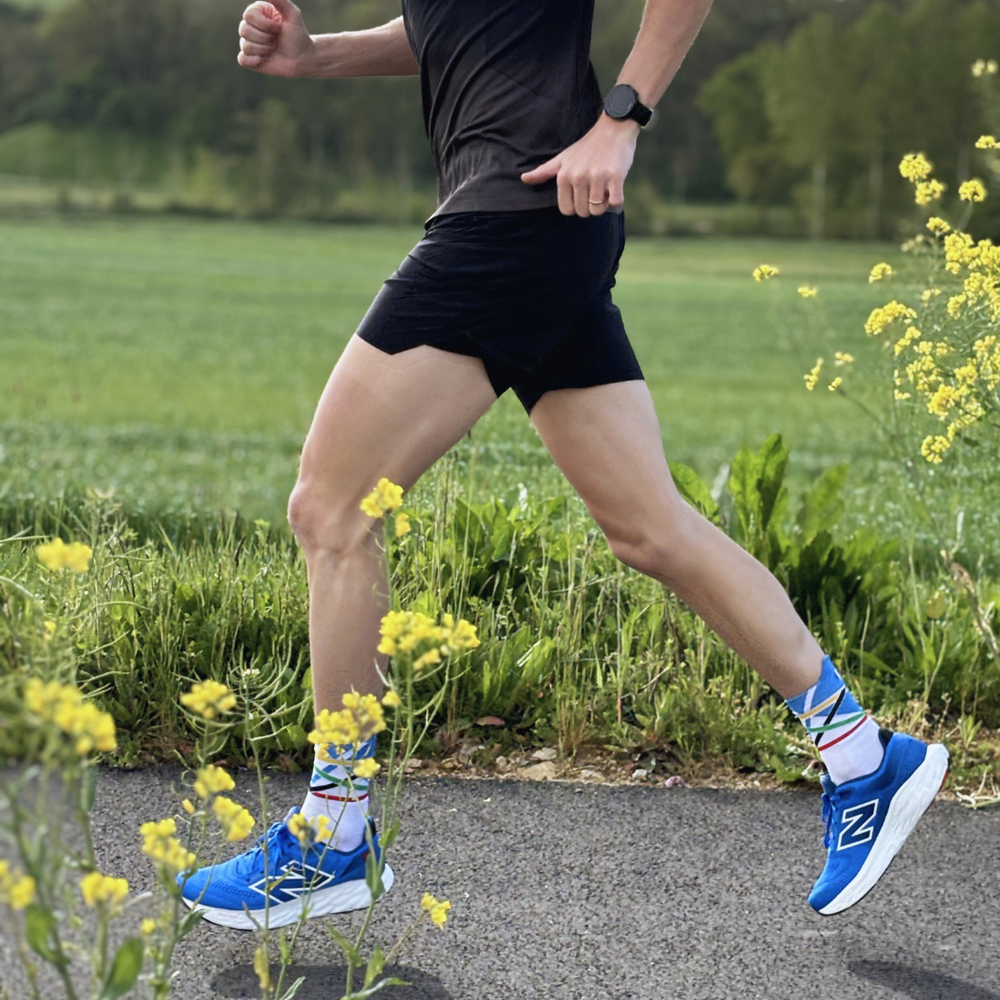
When we talk about running, we immediately think of shoes, technical clothing, and physical preparation. Yet, one accessory is often underestimated: running socks, true allies for your performance . At Maison Broussaud, a French sock manufacturer for three generations, we know that comfort starts with your feet.
Why run with running socks?
Running socks are not just accessories; they are an integral part of a runner's gear. They play a key role in performance and well-being, notably through:
-
Prevention of blisters and irritation, with reinforced areas and flat or seamless seams.
-
Sweat wicking away thanks to breathable socks made of technical fibers (polyamide, polyester, merino wool).
-
Arch support, which reduces friction and optimizes comfort.
-
Targeted cushioning and padding at the heel or forefoot for added comfort.
In short, wearing suitable technical running socks can make the difference between a smooth workout and a painful run.

What are the best socks for running?
The choice depends on your practice:
-
For road cycling, opt for thin and breathable models.
-
For trail running, opt for more robust, reinforced and durable socks to withstand rough terrain.
-
For recovery or long distances, compression socks can promote blood circulation and reduce muscle fatigue.
Men's and women's running socks: what are the differences?
Although the needs are similar, men's sports socks and women's sports socks have adapted cuts:
-
Women's models favor a more fitted upper and slim waists adapted to their body shape.
-
The men's models are designed for optimal support on wider feet.
At Maison Broussaud, we develop distinct ranges so that every runner can find the most suitable sock.
What type of sock is best for running?
Materials directly influence performance:
-
Synthetic fibers (polyamide, polyester) ensure breathability and moisture wicking.
-
Merino wool, which is thermoregulating, is ideal for cold weather.
-
Anti-blister socks often incorporate a technical blend to limit friction.
The advantage of running socks made in France
Choosing socks made in France means investing in:
-
Impeccable quality thanks to artisanal expertise.
-
A responsible commitment: short supply chains, local production and sustainable materials.
-
Increased durability: our models are designed to withstand wear and tear and accompany runners over the long term.
Wearing French running socks means supporting local, ethical, environmentally friendly and performance-oriented production.
How to choose the right running socks?
Some tips for finding the perfect pair:
-
Check the composition and opt for breathable technical fibers.
-
Choose the right height according to your habits and needs.
-
Adapt them to your activity: trail running, road running, occasional running, marathon or recovery.
Running socks are not just a detail, but a crucial element for your performance, comfort, and recovery. Anti-blister, breathable, durable, and adapted to each discipline , they allow you to go further with complete peace of mind.
With our collections of men's and women's sports socks, including our French-made designs, Maison Broussaud is with you every step of the way. Discover our sports range for skiing , hiking , cycling , and horseback riding .
FAQ – Running Socks
What is the best sock thickness for running?
The ideal thickness depends on the season and the intensity of the activity. Thin, breathable socks are suitable for summer or competition, while thicker, padded models provide extra comfort in winter or over long distances.
Why buy running socks instead of regular socks?
Running socks are designed with technical fibers that reduce friction, wick away sweat, and prevent blisters. Unlike regular socks, they support the arch of the foot and improve comfort during exercise.
What type of socks should I wear for running?
For road running, choose thin, breathable socks. For trail running, opt for reinforced, durable models. If you're looking to improve recovery, choose compression socks.
When should I change my running socks?
It is recommended to replace them as soon as the cushioning flattens, the fabric shows signs of wear, or breathability is compromised. On average, a regular runner should replace their socks every 6 to 12 months.
What is the best sock height for running?
The choice depends on your preferences but also on the discipline (road vs trail).
-
Invisible or low-cut: perfect for summer and short outings.
-
Mid-calf: they provide better support and protect against chafing.
-
High or compression: useful for recovery and prolonged exertion.


